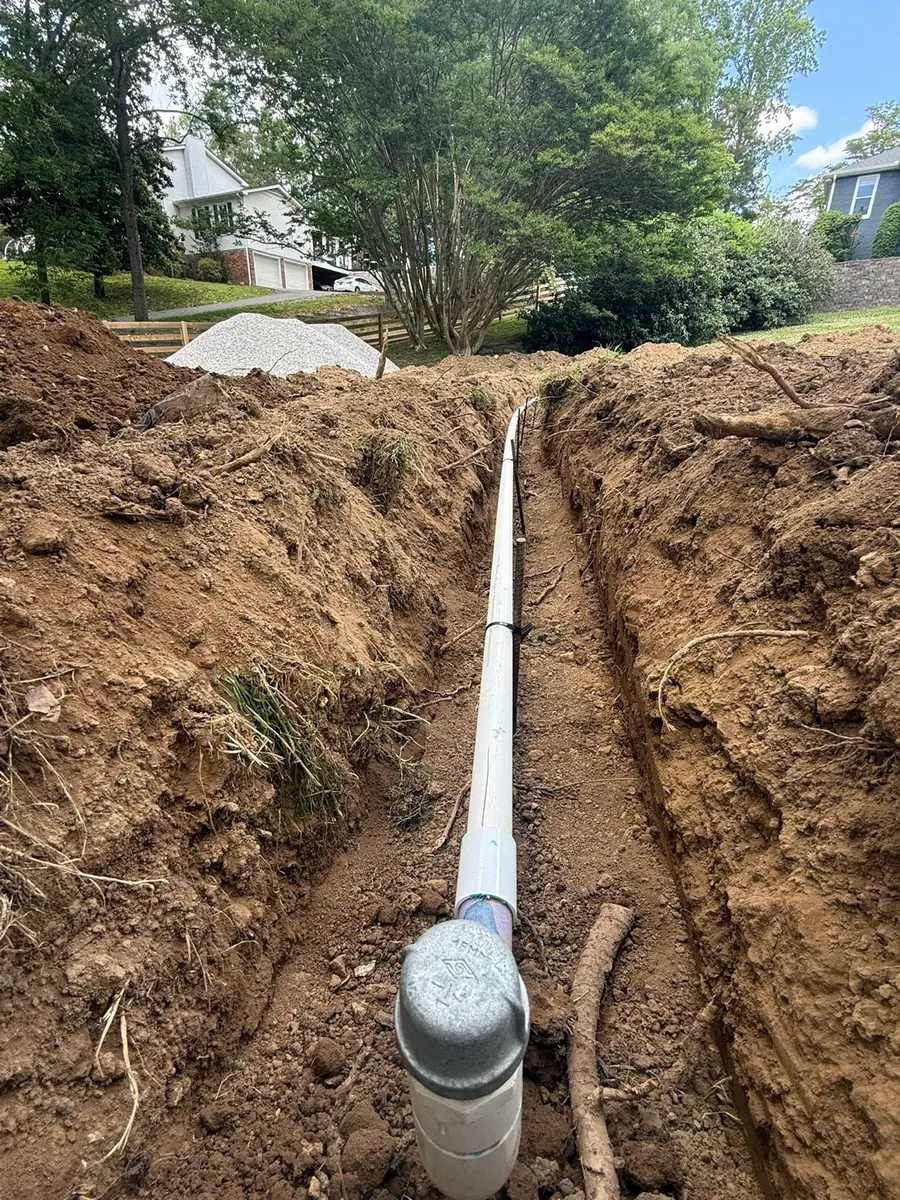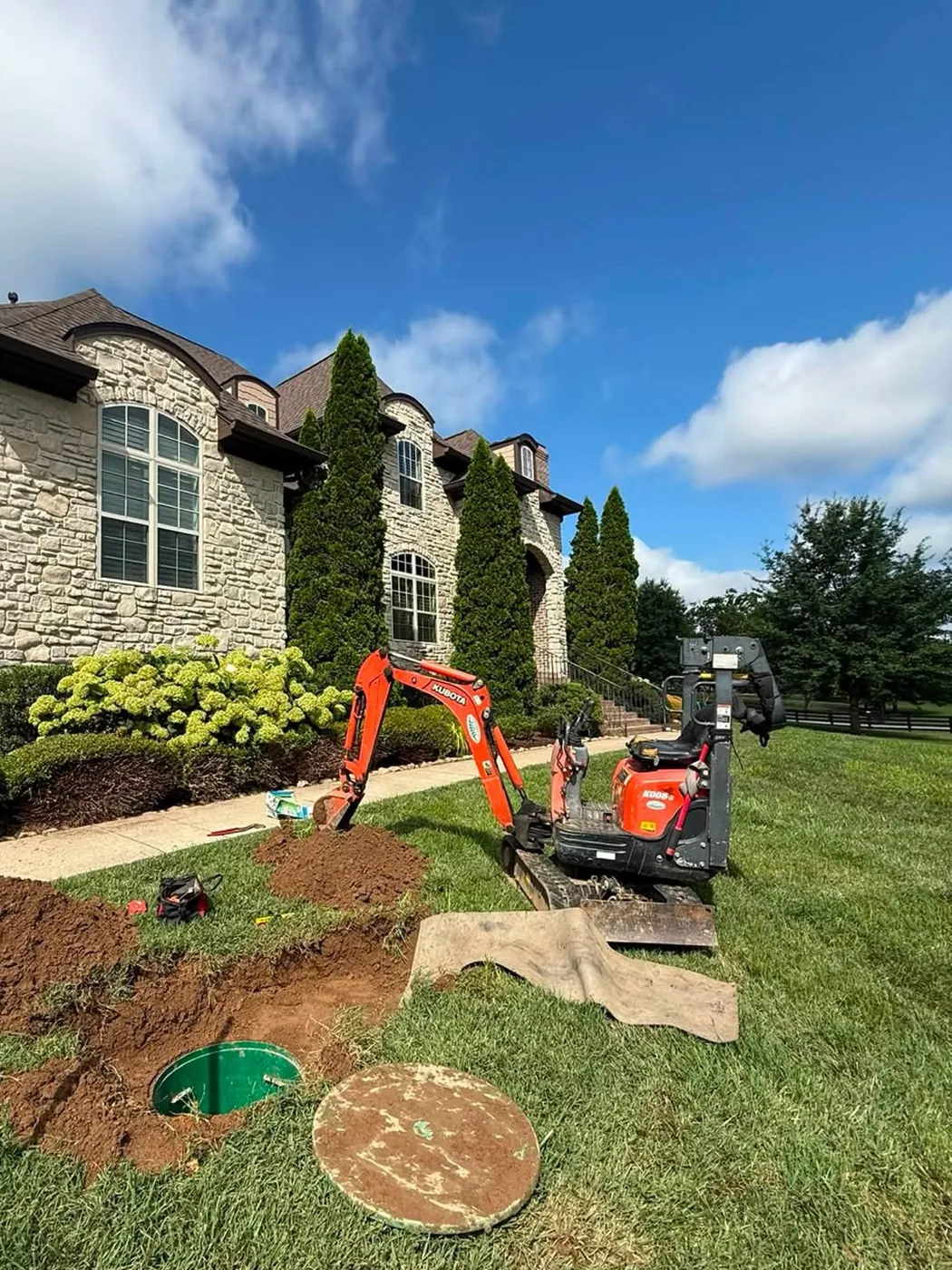
Our excavation services cover the digging for septic systems and buried utility lines in Thompson's Station and across Williamson County. We dig tank holes, pump chamber holes and disposal field trenches for new systems. We trench for water lines, sewer lines and underground electric lines. When a tank, a lid or a line is buried, we dig down to it so the repair can start. Every job ends the same way. The dirt goes back in the hole, and we grade the ground smooth.
Septic Superior is a family septic company based in Thompson's Station. More than 20 years of septic work in Williamson County sit behind the company. As an excavation company, our digging centers on septic work and the buried lines that serve a house. That covers the digging for a septic system installation and the trench for a sewer and water line repair. Estimates are free and done on site, and you get one price for the whole dig.
Tell us about your project and we will get right back to you.
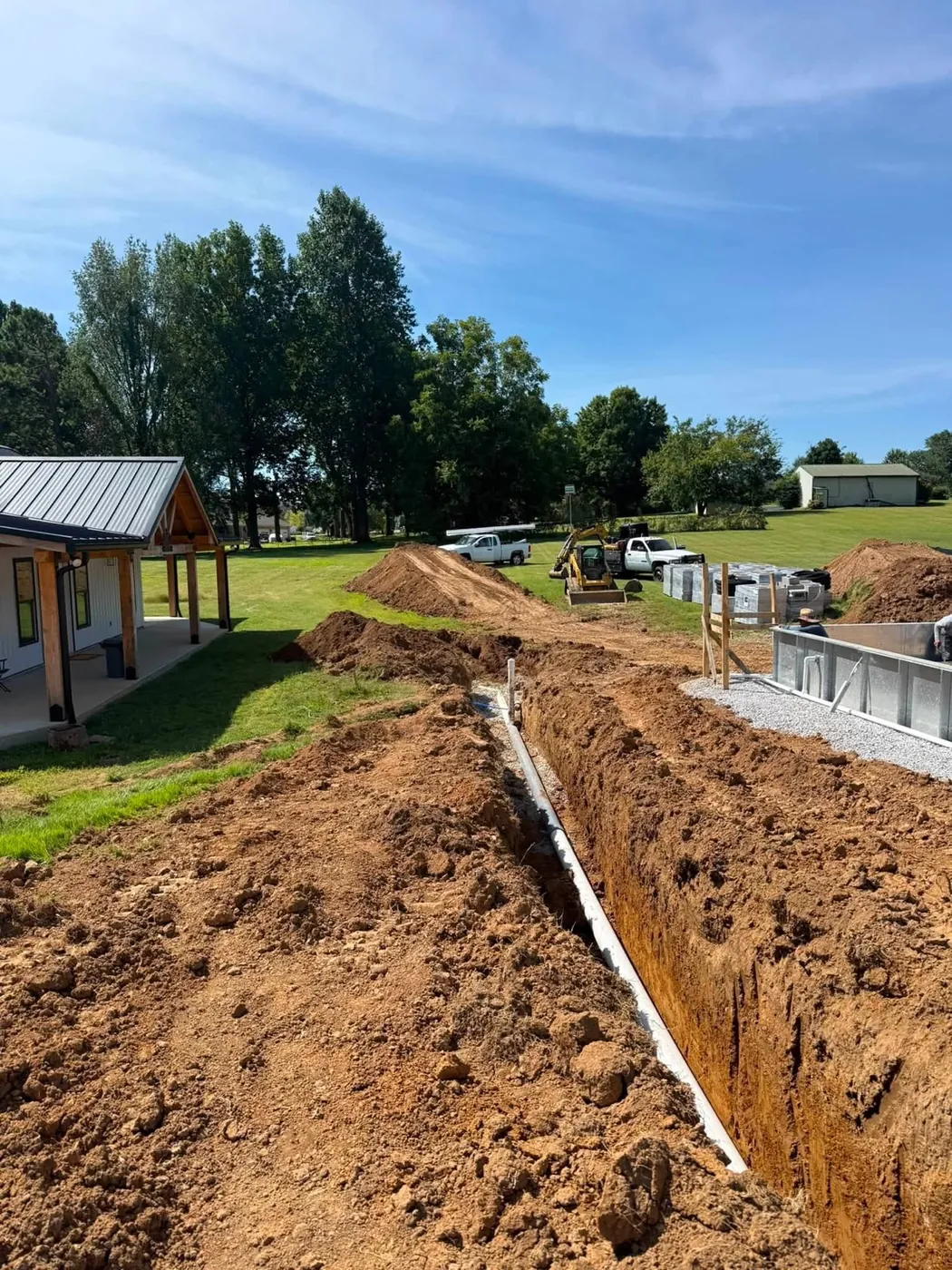
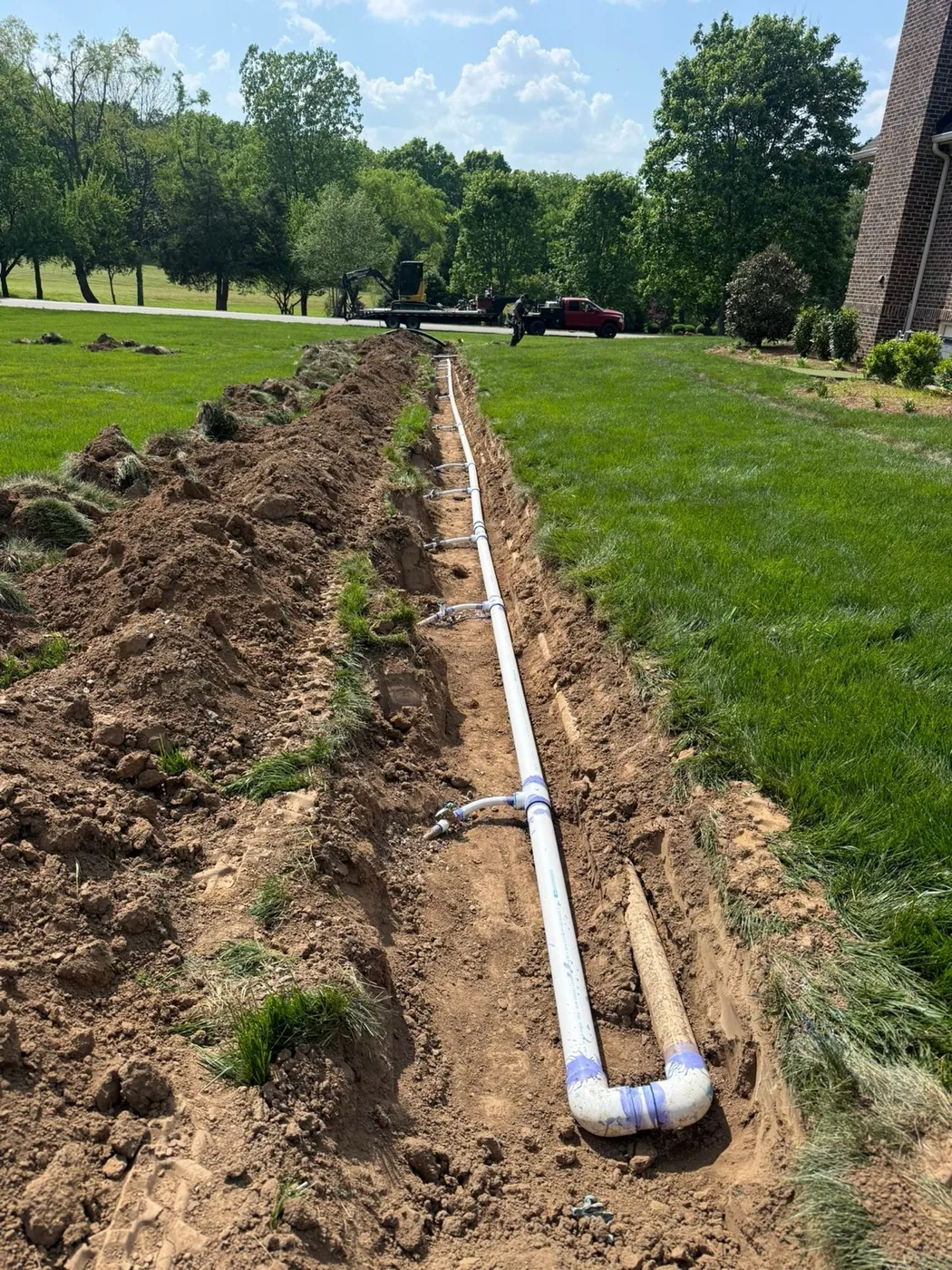
Every dig has two halves: opening the ground and closing it back up. On a new system, the excavator bucket opens the tank hole, the pump chamber hole and the field trenches. On a repair, we dig down beside the house to expose a buried tank, lid or line. On a line job, the bucket cuts a narrow trench from one point to the next. The dirt lands on a spoil pile beside the dig. When the work below is done, the pile goes back in and we grade the ground smooth.
Septic trenches are where the county's numbers get exact. In Williamson County, a conventional disposal field needs at least 36 inches of natural soil over bedrock. Its trenches are 36 inches wide and 24 to 30 inches deep. The bottom is dug as level as possible, with at most 2 inches of total fall in a 100-foot trench. The rule has that fall measured with an engineering or surveying level. We dig to that spec on new fields and on drain field repair jobs that need new trenches.
Williamson County's water line rule sits in Section 15. A water line may never cross, pass through or go under the platted or designated disposal field area. It also stays at least 10 feet from that area. The same goes for the septic tank, the tight line to the field and any curtain drain. The Section 13 setback table puts water lines 10 feet from septic and dosing tanks and from the disposal field. That 10 feet also appears in the notes the county requires on every plat. These are minimums, and local conditions can call for more.
Curtain drains carry one more rule, and it covers electric lines too. A curtain drain is one of the drains the county calls a soil drainage improvement practice. No underground utility line, electric or water, may be laid in or routed through that trench. Any trench dug for a utility stays at least 5 feet from it. Crossing a tight line, a supply line or a drain pipe with a water line takes an advance written request. The permit holder sends it to the county with construction drawings, and the crossing waits for written approval.
Tennessee 811 comes first. Tennessee requires a locate ticket from whoever is responsible for the digging, so on our jobs we get it. The ticket goes in at least 3 and no more than 10 working days before the dig. Three working days means 72 hours, not counting weekends and holidays. There is no charge for the marking. The utilities have 3 business days to mark the site, and we wait those days out. A ticket stays good for 15 calendar days, and a longer job updates it 3 working days before it expires.
Then OSHA's trench rules apply, known in shorthand as the 2, 4, 5 rule. The spoil pile and equipment stay at least 2 feet back from the edge. A trench 4 feet deep or more needs a ladder, stairway or ramp within 25 feet of anyone in it. Workers in a trench need a cave-in protective system, such as sloping, shoring or a shield. OSHA allows two exceptions. One is a dig made entirely in stable rock. The other is a trench less than 5 feet deep where a competent person finds no sign of a cave-in.
Soil and rock come first. Published cost guides price digging by the cubic yard. Rock that needs jackhammering costs far more per yard than plain dirt. Depth is next, since a deeper trench means more dirt out and more dirt back in. From 5 feet down, OSHA's cave-in rule adds sloping, shoring or a shield, unless it is all stable rock. Length drives every line job, since the guides price trenching by the linear foot. They also note that many excavation contractors set a minimum project fee.
Access and setbacks shape the route. A trench that bends around a septic tank, a field or a curtain drain runs longer than a straight one. Narrow gates and steep yards slow the machine down. The amount of ground to backfill and grade counts too. So does whether a buried line or tank has to be found first. Locating a buried septic tank is its own step. We look at the site and hand you one price, so ask for a free on-site estimate.
Free, no-obligation estimates across Williamson County and Middle Tennessee.
(615) 957-9682From the first phone call to the final grade, here is exactly how it goes.
Tell us what the system is doing, or what the new build needs. You talk to the family, not a call center, and we set a time to come out.
We look at the tank, the field, the soil, and the access. Then you get one price for the whole job before any work starts.
We file the county or state septic permit where the job needs one, then dig, set, and plumb the work to what the permit calls for.
The inspector signs off before anything is covered. We backfill, grade the ground smooth, and leave the yard ready to seed.
Common questions about excavation across Williamson County and Middle Tennessee. Don't see yours? Give us a call and ask.
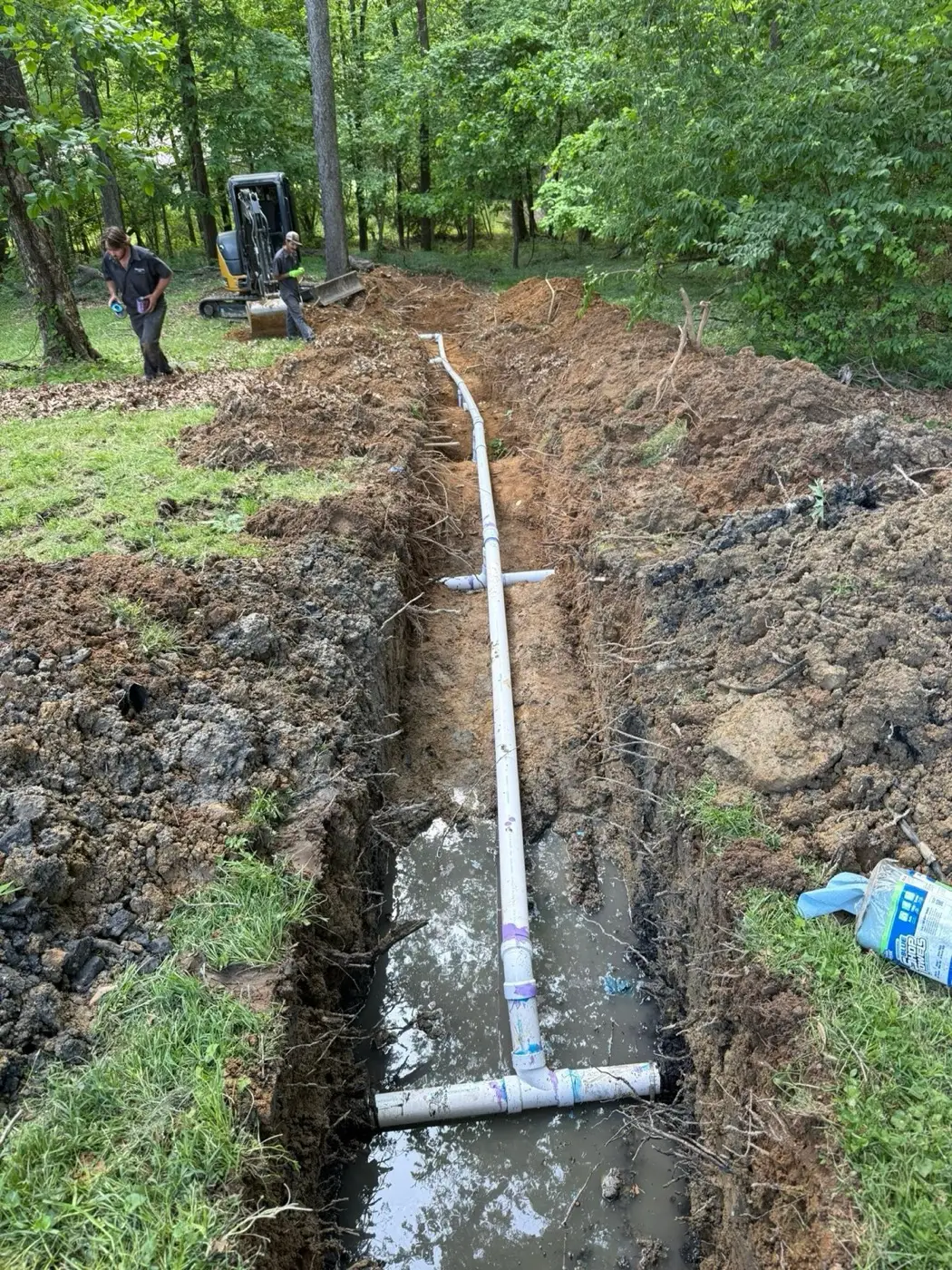
Buried sewer and water lines crack or clog under the yard. We find the bad section and put in new pipe.
View Details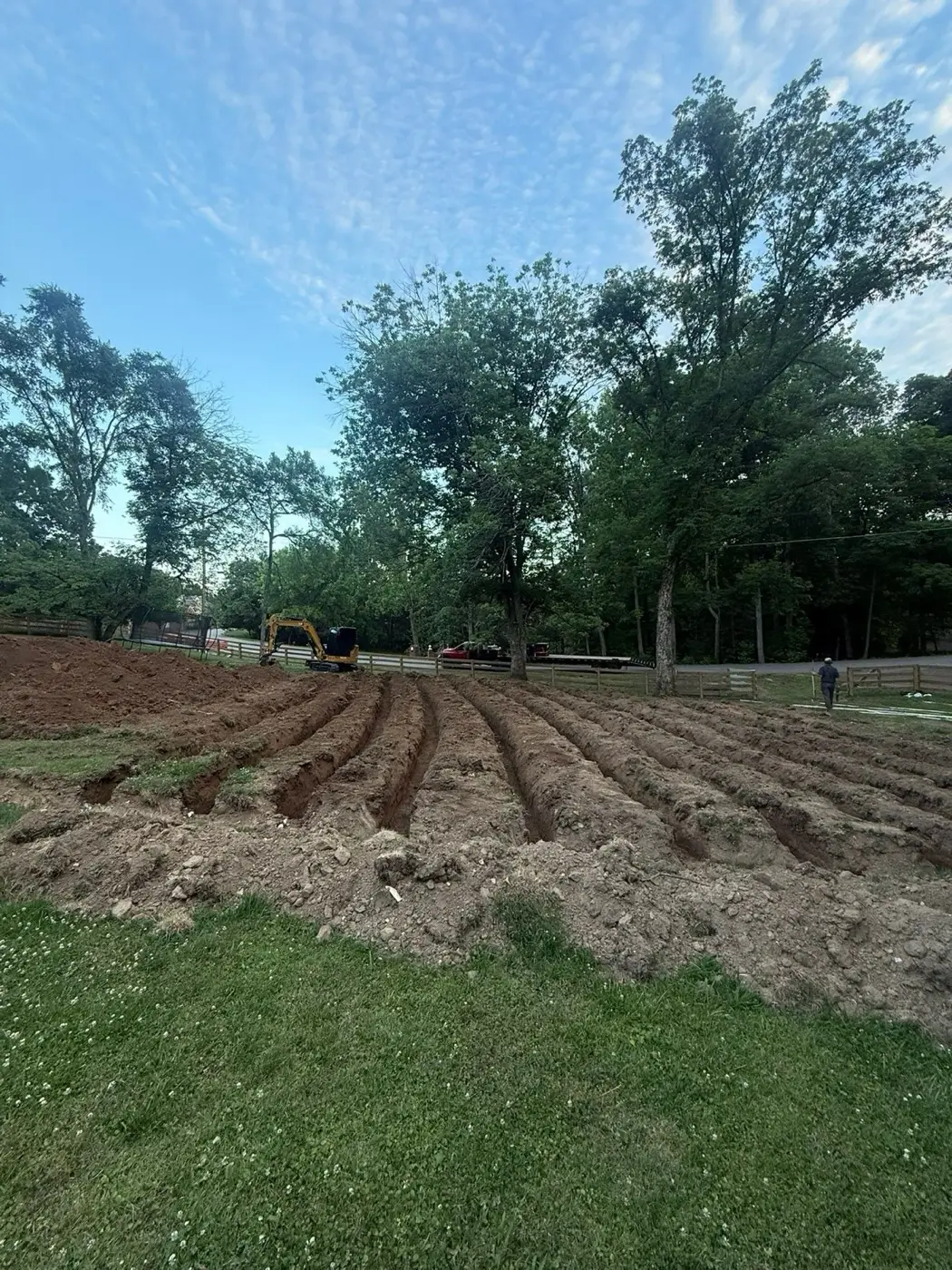
A soggy yard or a sewage smell over the field lines means the drain field has stopped absorbing water. We find the failed section and repair it, from a single lateral to a full leach field replacement.
View Details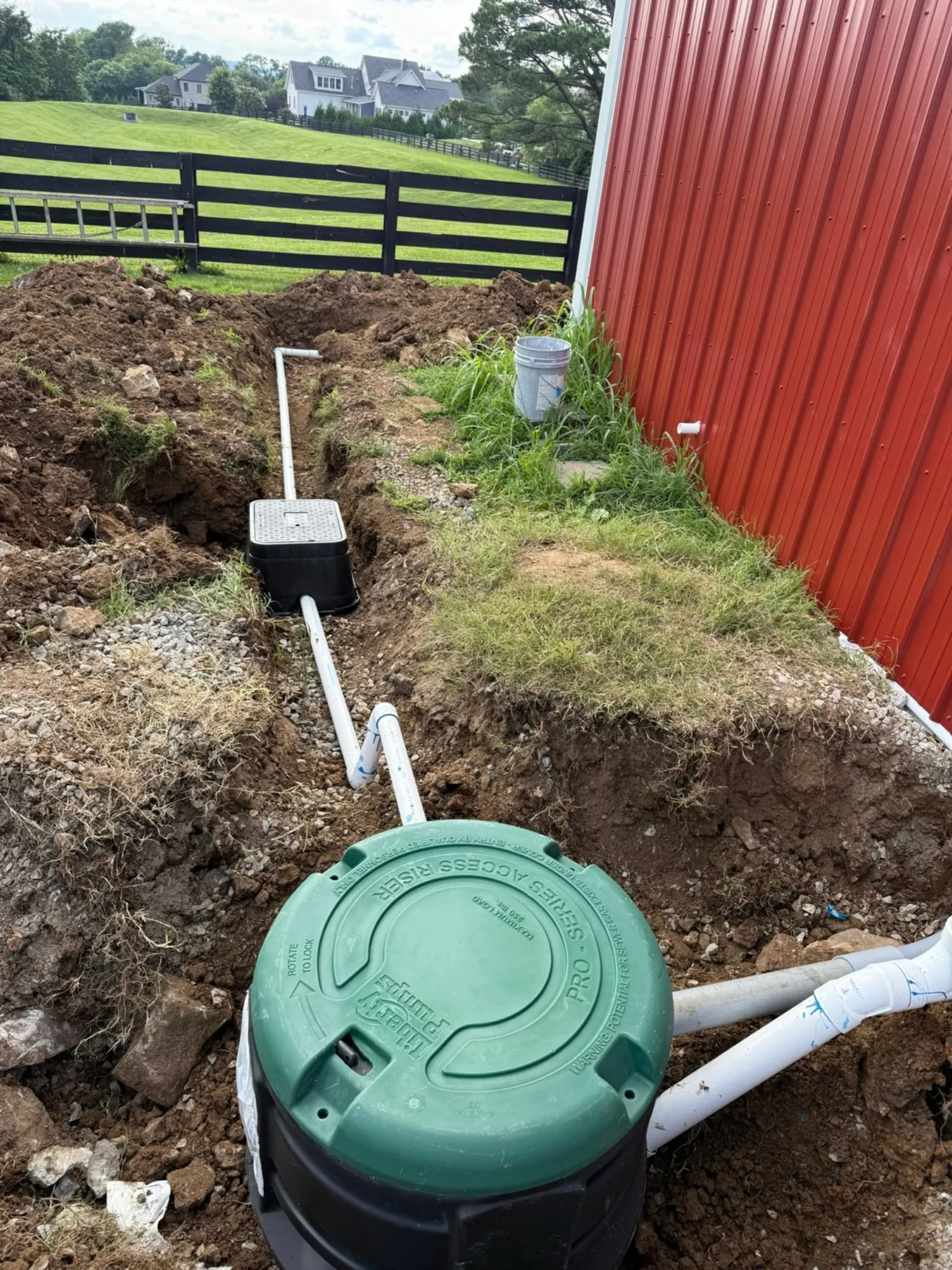
We set risers and lids that bring a buried septic tank up to the grass, and we locate tanks nobody has records for.
View Details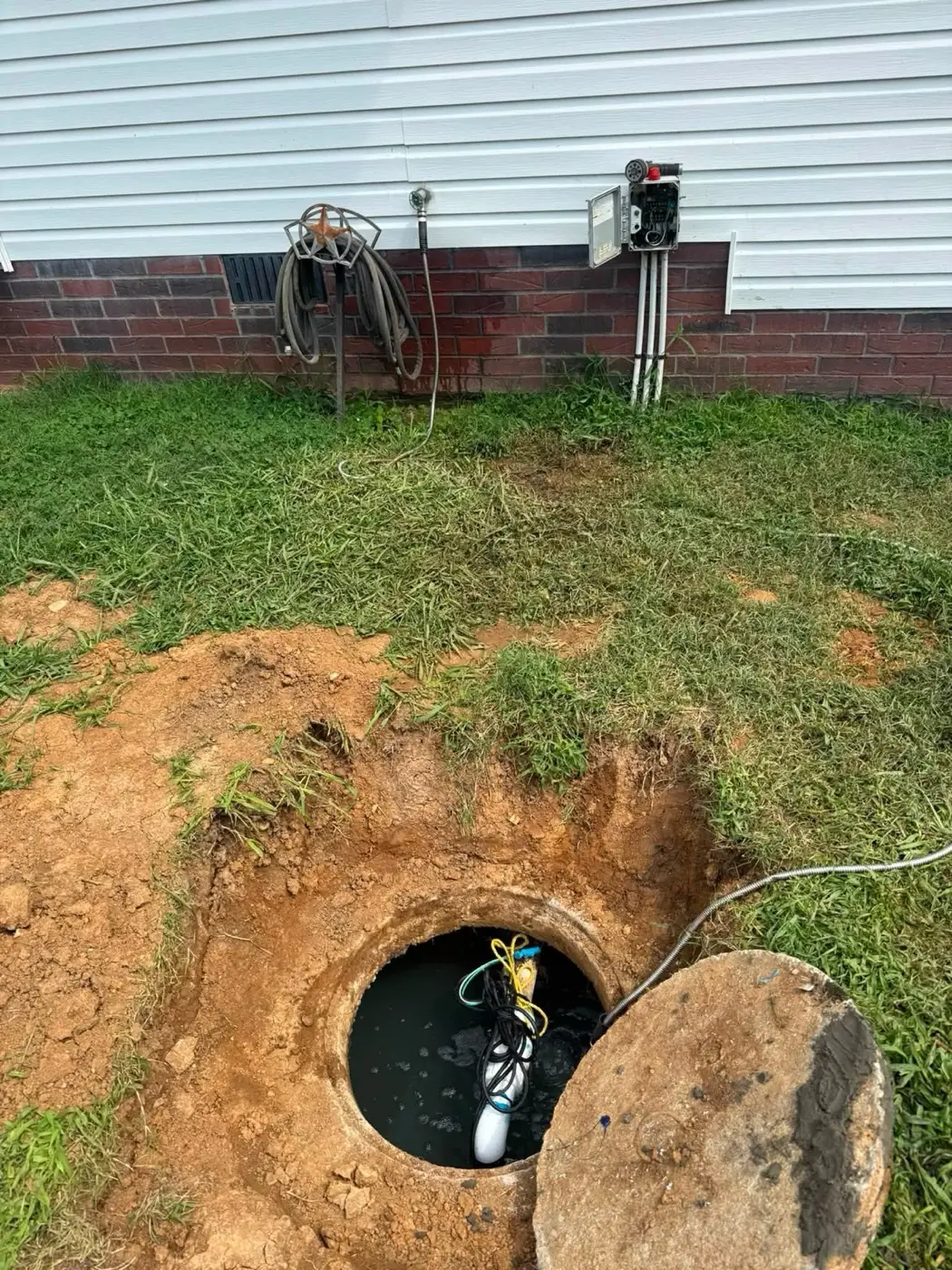
Septic tank repair for cracked tanks, broken lids and risers, failed baffles, and backed up lines. We pull the lid and find the real problem before we quote the work.
View DetailsMore than 20 years of septic work in Williamson County sit behind the company. That time spent digging through the clay and shallow limestone under these towns shapes every system we build.
Septic Superior is a family septic company. The same family crew plans the dig, does the work, and finishes the yard, so nothing gets handed off to people you never met.
Williamson County runs its own septic office, and the counties around it permit through the state. We file the right paperwork in the right office and never cover a system before the inspector signs off.
Tank, field lines, pumps, and the buried sewer and water lines that feed them. When something fails, we find the real cause instead of selling you the part we happen to fix.
A new build that needs a septic system, a tank that is overdue for a pump out, or a drain field that will not dry up? Call or send the form and we will look at the job with you and price the whole thing. The estimate is free.
Tell us about your project and we will get right back to you.