How much does septic tank pumping cost in Tennessee?
Angi’s 2026 guide puts the average cost to pump a septic tank at $428. Most homeowners pay $292 to $565 in that guide. This Old House’s 2026 guide lists about $420 on average. Those are national ranges; Middle Tennessee jobs land inside them, and the site visit sets the real number. Our on-site estimates are free.
What does it cost to pump a septic tank in Tennessee?
Two published 2026 cost guides land in the same place. Angi’s 2026 guide puts most homeowners at $292 to $565. This Old House’s 2026 guide gives a $290 to $560 range. The two ranges nearly match.
Pumpers price by the gallon, which is why those ranges are wide. This Old House’s 2026 guide reports average rates of $0.23 to $0.40 per gallon. HomeGuide’s guide, last updated in 2023, puts it higher at $0.30 to $0.70 per gallon.
There is no published Middle Tennessee pumping table to point at. A quote for a home in Franklin or Spring Hill comes down to tank size and access. It also depends on how far the truck hauls the load. We price septic tank pumping after we see the tank, and the on-site estimate is free.
What do the 2026 guides show by tank size?
Tank size sets the base price because pumpers charge by the gallon. A 1,000 gallon tank holds less than a 1,500 gallon tank, so it costs less to empty.
The table below puts two 2026 guides side by side. Angi’s 2026 guide publishes sizes from 750 to 1,750 gallons. This Old House’s 2026 guide publishes only 1,000 and 1,500 gallon figures. The other rows read not listed.
Angi’s 2026 guide also says pumping a 2,000 gallon septic tank may cost $700 or more. If you do not know your tank size, we find it on the visit. We confirm it before we quote a septic tank pump out.
Pumping cost by tank size in two published 2026 cost guides. These are national guide figures.
| Tank size | Angi 2026 guide | This Old House 2026 guide |
|---|---|---|
| 750 gallons | $250 to $550 | not listed |
| 1,000 gallons | $325 to $700 | $225 to $400 |
| 1,250 gallons | $375 to $900 | not listed |
| 1,500 gallons | $450 to $1,100 | $345 to $600 |
| 1,750 gallons | $550 to $1,250 | not listed |
What moves the price up or down?
Two homes with the same size tank can get different numbers. These are the parts of the job that move the price:
- A buried lid that has to be dug up before the hose goes in
- Sludge that set up hard after years without pumping
- Cleaning or jetting the walls on top of a plain pump out
- An effluent filter that needs pulling and rinsing
- A second tank to empty on a pump system
- An emergency or after-hours call
- A long haul to the permitted treatment plant
This Old House’s 2026 guide puts thick, set-up sludge at $100 to $300 on top of standard rates. The same guide puts effluent filter cleaning at $100 to $200, and says many companies include it with pumping. Septic Tank Hub’s 2026 guide puts after-hours emergency service at 20 to 50 percent over the base quote.
A pump system has a pump tank sitting after the septic tank. That tank gets emptied too, which is more gallons on the truck. Pump or float trouble found on the visit is a separate septic pump repair job.
Why does Williamson County change the math?
Williamson County runs its own septic program through the Williamson County Department of Sewage Disposal Management in Franklin. Most counties around it permit through the Tennessee Department of Environment and Conservation, or TDEC. The disposal rule is where the two split.
Williamson County regs ban land spreading of septage in the county. The Board of Health put that rule in place in 1998. Every load pumped here goes to a permitted wastewater treatment facility, and that disposal is built into the price.
The state rule 0400-48-01 covers the TDEC counties around us. It sends septage to a public, community or private wastewater treatment facility when permission is obtainable. A permitted land disposal site is the fallback there.
Williamson County regs recommend pumping the septic tank every two to five years. With a garbage disposal the county raises that to every two years. Our guide to how often to pump a septic tank in Tennessee covers the schedule side.
What does a permitted pumper have to carry?
Pumping septage in Tennessee takes a state permit. The state rule 0400-48-01 sets that Septic Tank Pumping Contractor Permit at $200 per year. TDEC inspects the truck for every new permit and every annual renewal.
The same rule puts the firm name, address and permit number on both sides of the truck. The lettering is at least two inches high, in bold print on a contrasting background. Permitted pumpers also keep a monthly log of every pumping and discharge on a state form.
Williamson County regs add a county layer. A pumping contractor files a copy of the state pumper permit with the county. The county also calls for a wastewater discharge permit with an approved treatment facility.
All of that costs money to hold, and it sits under any quote you get. When a number lands far under the published ranges, ask what it includes before you book.
Does a septic tank riser pay for itself?
A riser is a collar that brings the tank lid up to ground level. Without one, a buried lid means digging before anything else happens.
Septic Tank Hub’s 2026 guide puts that dig at $150 to $300 in labor. That is before the work at the tank starts, and it comes back on every service visit. This Old House’s 2026 guide lists a tank riser for septic access at $300 to $1,000. That one is a one-time job.
Williamson County regs already call for ground-level access on a pump tank. The access riser is at least 24 inches across and reaches finished grade or above. The cover has to be visible at the ground surface.
A riser makes sense when every visit starts with a shovel. If your lid is under the grass, ask about septic tank riser installation while the tank is open. We can price the riser and the pump out on the same free estimate.
What does a pumping price cover?
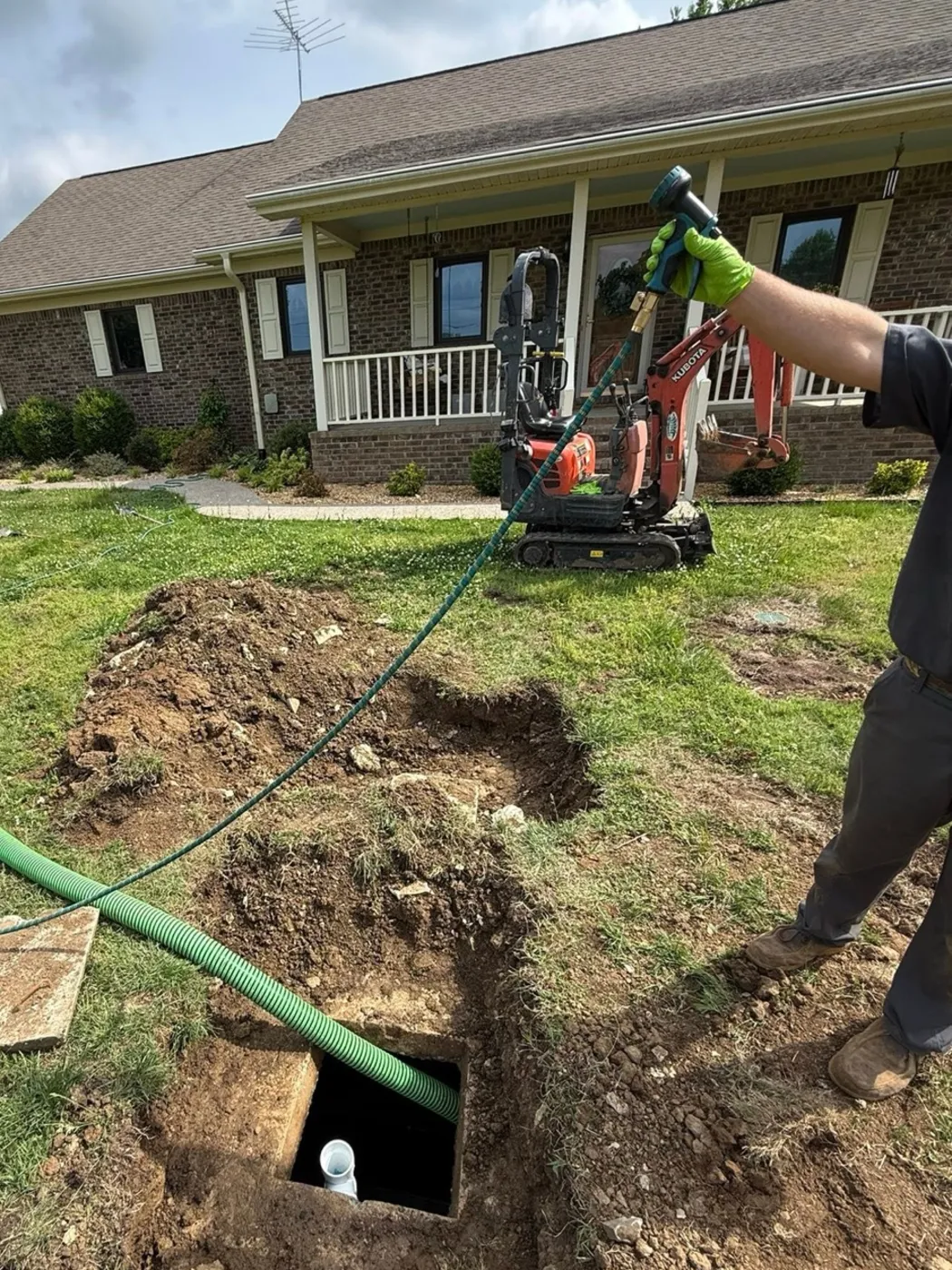
A pump out empties the tank. The truck runs a hose to the opened tank, pumps it down and hauls the load to a permitted plant. The price covers that work and the disposal.
Repairs are priced on their own. A cracked baffle, a failed effluent filter or a drain field that stopped taking water is separate work. We quote those after we see them.
Cleaning the tank walls is an add-on to a plain pump out. Angi’s 2026 guide puts the average cost to clean a septic tank at $400. Large tanks run closer to $1,000 in that guide. HomeGuide’s guide, last updated in 2023, puts jet cleaning an emptied tank at an extra $200 to $300.
Keeping the tank on a schedule is the cheaper version of all of this. Septic tank maintenance catches a filter or a lid problem before it turns into a bigger bill.
Frequently asked questions
How much does it cost to pump out a 1,000 gallon septic tank?
Angi’s 2026 guide puts a 1,000 gallon tank at $325 to $700. This Old House’s 2026 guide lists the same size at $225 to $400. Both are national guide ranges. Your number depends on the lid, the sludge and the haul. We give you one price on a free on-site estimate.
How much does it cost to pump a 1,500 gallon septic tank?
Angi’s 2026 guide puts a 1,500 gallon tank at $450 to $1,100. This Old House’s 2026 guide lists $345 to $600 for the same size. Bigger tanks hold more gallons, and pumpers price by the gallon. Access and set-up sludge move it inside that band. Our on-site estimate is free.
Is septic tank cleaning the same as pumping?
Pumping empties the tank. Cleaning goes further and washes down the walls. Angi’s 2026 guide puts tank cleaning at $400 on average, with large tanks closer to $1,000. HomeGuide’s guide, last updated in 2023, puts jet cleaning at an extra $200 to $300. Our on-site estimate is free.
Does a buried septic tank lid cost extra?
Yes. Someone has to find the lid and dig down to it before the hose goes in. Septic Tank Hub’s 2026 guide puts that dig at $150 to $300 in labor. A riser ends the digging, and This Old House’s 2026 guide lists one at $300 to $1,000. The on-site estimate is free.
Do emergency or after-hours calls cost more?
They usually do. Septic Tank Hub’s 2026 guide puts after-hours emergency service at 20 to 50 percent over the base quote. An after-hours call pulls a truck off the next day’s schedule. We take emergency septic calls in Williamson County and hand you a price before we start. Estimates are free.
Does a pump system cost more to pump?
A pump system has a second tank, the pump tank, sitting after the septic tank. Williamson County regs say it gets pumped on the same two to five year schedule. Two tanks put more gallons on the truck, so the price runs higher. We confirm what is on your lot first. Estimates are free.
Does the pumping price include repairs to my septic system?
No. A pumping price covers emptying the tank and hauling the load to a permitted treatment facility. Say we find a cracked baffle, a bad effluent filter or a field that will not take water. We quote that work on its own. The on-site estimate for either is free.
We pump and clean septic tanks across Williamson County and Middle Tennessee. That runs from Thompson’s Station out to Franklin, Spring Hill, Columbia and Murfreesboro. You get the number before the hose goes in. Call (615) 957-9682 or use the contact form. The on-site estimate for septic tank pumping and cleaning is free.